Beyond Backups: Navigating the Critical Failures of Kubernetes Disaster Recovery

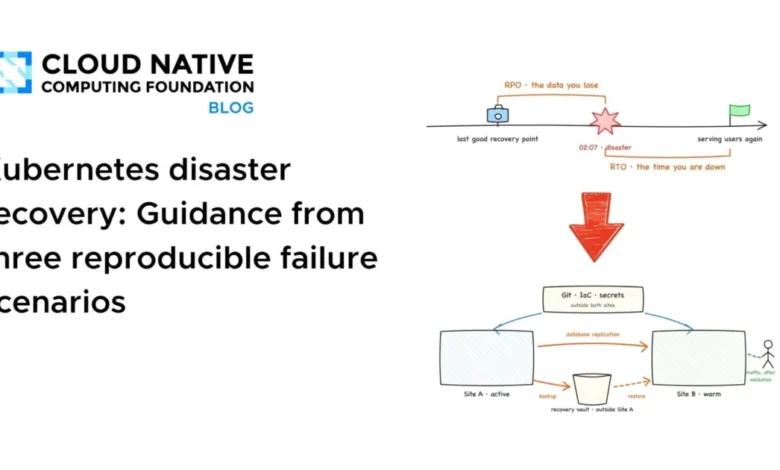
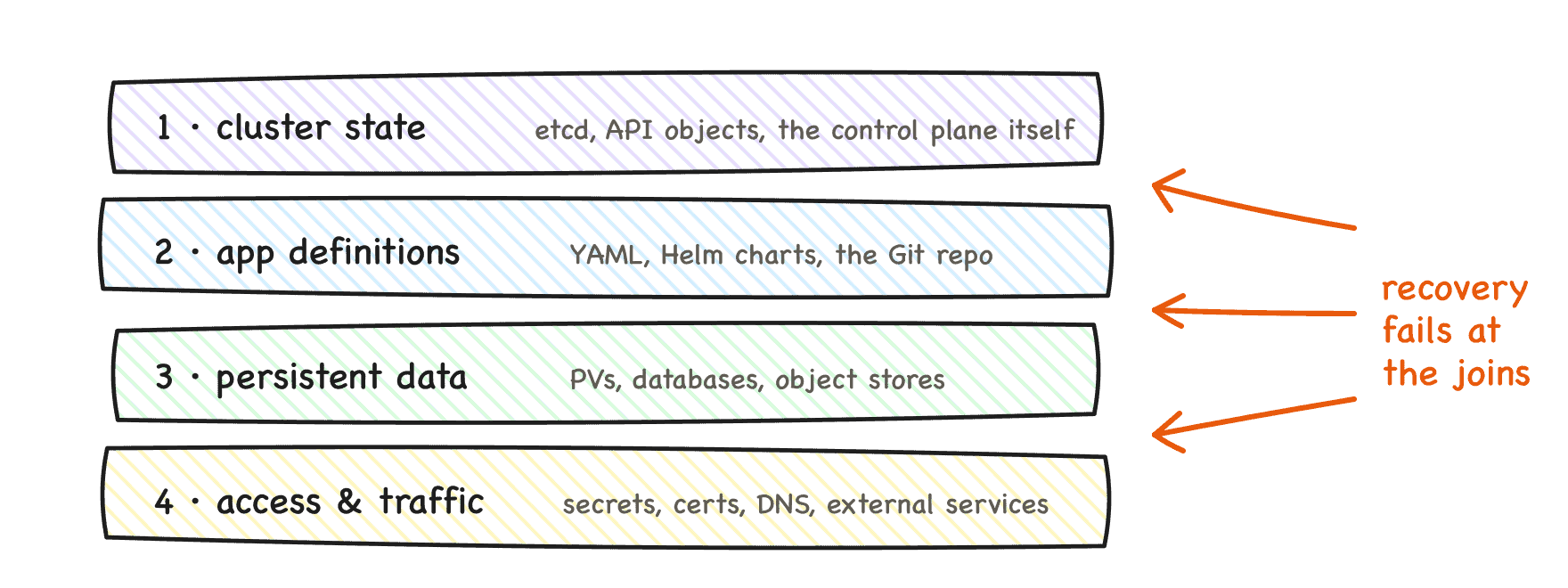
In the modern enterprise landscape, the proliferation of stateful applications on Kubernetes has transformed the way organizations approach data persistence and continuity. As of September 10, 2026, CNCF Ambassadors Saiyam Pathak and Saloni Narang have published a technical analysis highlighting a critical divide between the act of taking a backup and the reality of achieving a successful recovery. Their research, centered on three reproducible failure scenarios, underscores that many organizations mistakenly equate the completion of a backup job with a guarantee of business continuity. This analysis serves as a wake-up call for platform engineers, demonstrating that recovery often fails at the "joins" between layers—the intersections where infrastructure, state, and application definitions meet.
The Four Pillars of Recovery
True recovery in a Kubernetes environment requires the harmonious restoration of four distinct layers: the infrastructure layer, the orchestration layer, the application state (persistent volumes), and the application configuration (declared state). Each layer is supported by mature, specialized tooling—such as Terraform for infrastructure, GitOps controllers for configuration, and CSI snapshot APIs for storage. However, the study posits that individual success at each layer does not equate to a successful system-wide recovery. When these layers fail to synchronize, organizations are often left with a "running" application that is functionally useless: a cluster with no data, or data that lacks a valid traffic path.
Scenario Analysis: Beyond the Green Dashboard
The research details three specific failure modes that occur when organizations rely on superficial verification metrics rather than end-to-end testing.
1. The Data Verification Gap
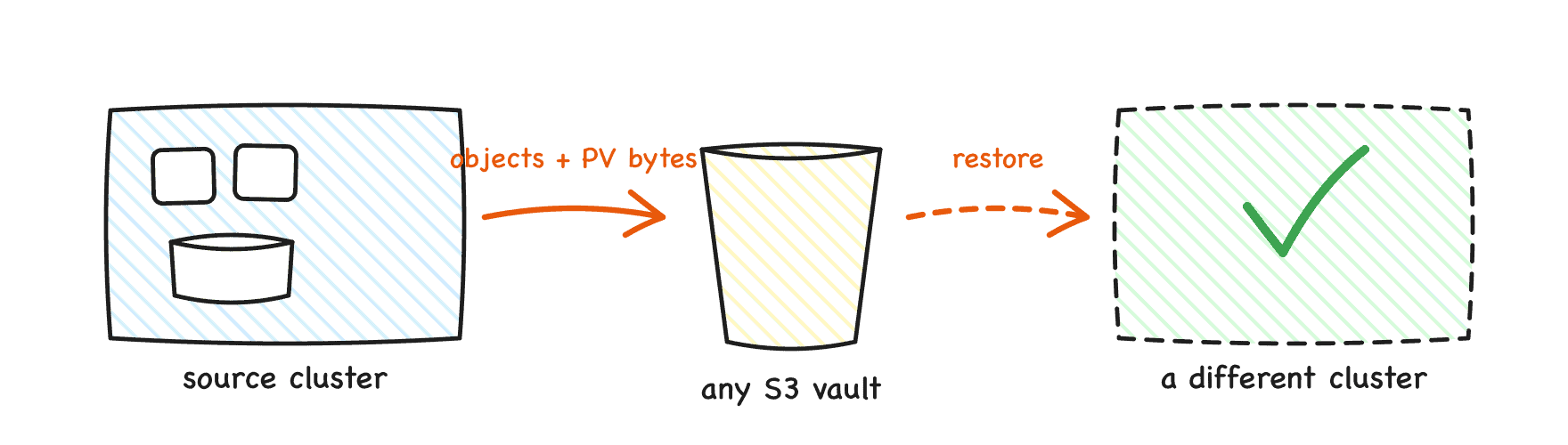
Many backup systems report a "Completed" status as soon as the orchestration metadata is captured. However, this often ignores the actual movement of data bytes from persistent volumes (PVCs) to external storage. Using tools like Velero, the researchers demonstrated that unless an organization explicitly validates that volume data has landed in an off-site store, they are operating under a false sense of security. A recovery plan that does not account for the recreation of the underlying infrastructure—nodes, network, and DNS—is essentially incomplete.
2. The GitOps Trap
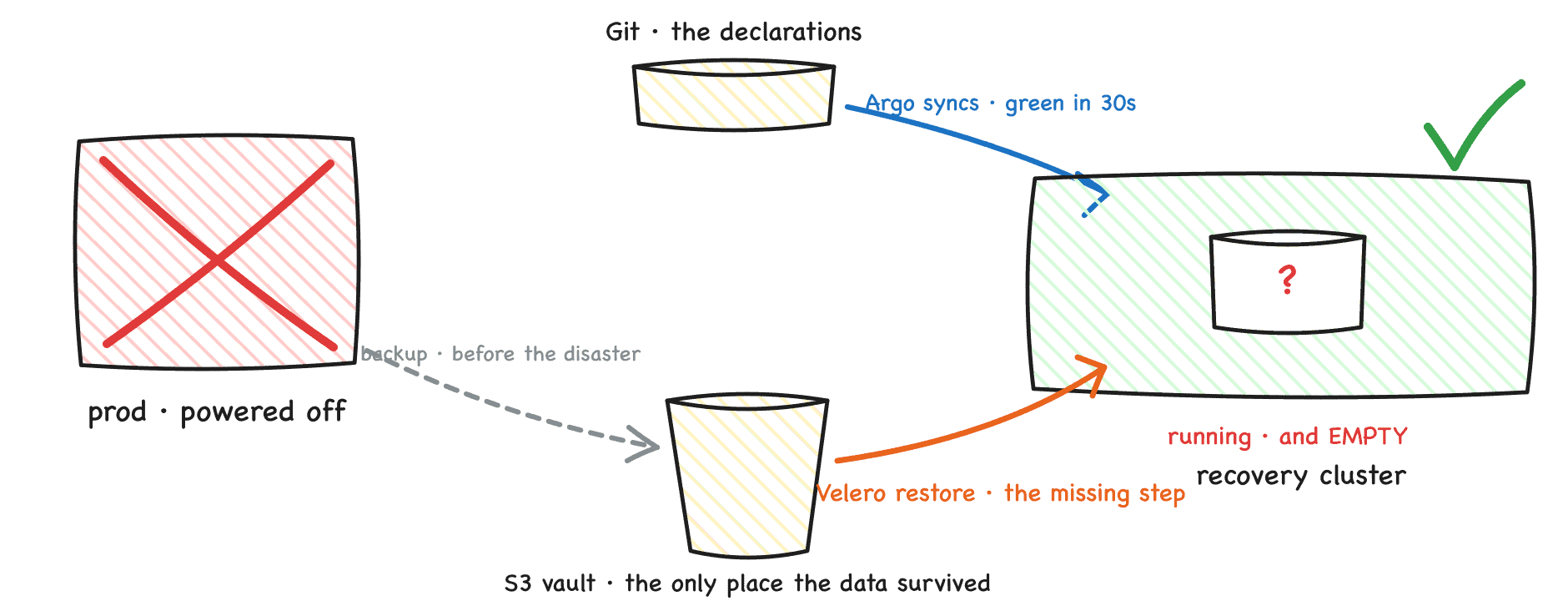
A common failure point arises when organizations rely solely on GitOps to manage recovery. In a disaster scenario, a GitOps controller will perfectly reconstruct the declared state of an application—creating services and stateful sets as defined in the repository. However, because Git does not store the database contents themselves, the controller merely provisions empty volumes. The application appears "healthy" on a dashboard, yet it contains no historical data. This highlights the critical distinction between "intent" (YAML) and "state" (data), and why both must be restored in tandem to achieve a functional recovery point.
3. Multi-Volume Inconsistency
For complex applications spanning multiple volumes, such as databases with separate WAL (Write-Ahead Logging) partitions, individual snapshotting is insufficient. The researchers found that even if individual volumes are backed up successfully, if the snapshots are taken at different points in time, the resulting data is "torn." This leads to logical corruption, where payment records may reference orders that do not exist, rendering the database state inconsistent and unusable. The introduction of the VolumeGroupSnapshot API, which reached General Availability in Kubernetes v1.36, provides a standardized mechanism to ensure atomic, crash-consistent snapshots across multiple volumes, marking a significant milestone for cloud-native data integrity.
Chronology of a Recovery Audit
The laboratory environment established by Pathak and Narang provides a blueprint for how organizations should conduct their own recovery drills. The chronology of a successful test follows a rigorous path:
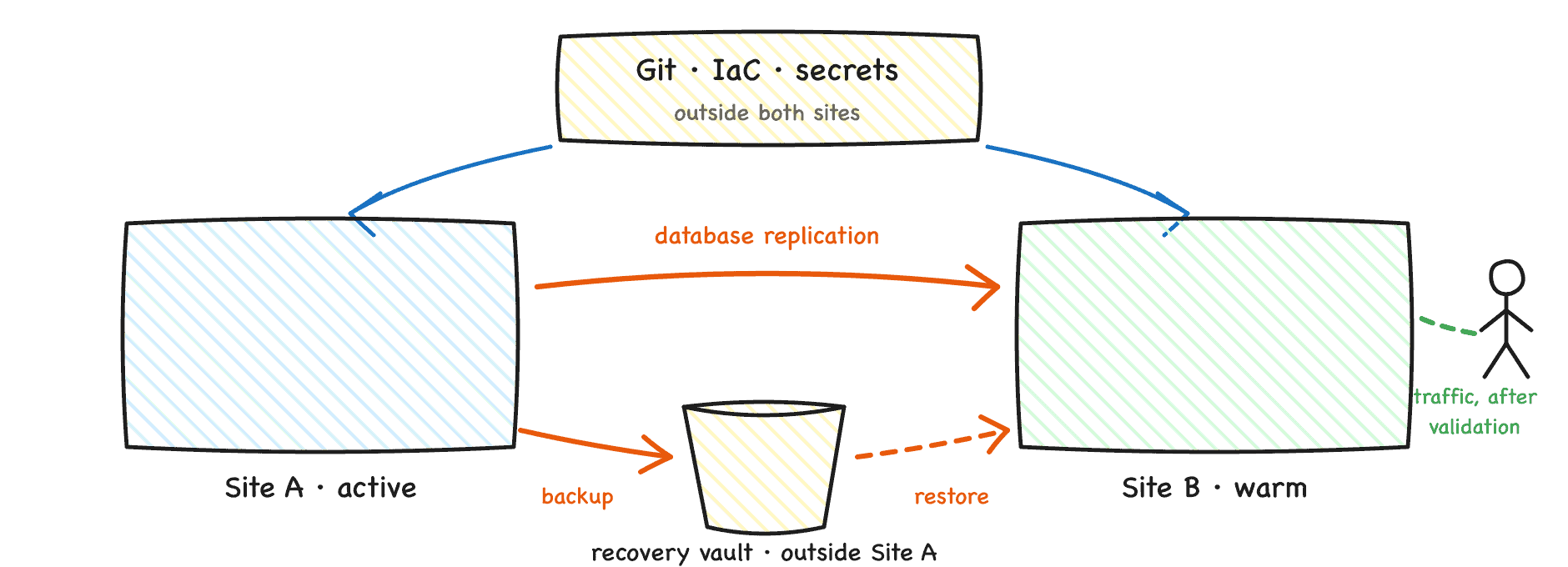
- Initialization: Defining the failure domain and ensuring that the recovery infrastructure is independent of the primary cluster.
- Execution: Triggering the disaster event (e.g., total cluster shutdown).
- Restoration: Re-provisioning the infrastructure and syncing the GitOps state.
- Data Injection: Recovering the persistent volumes from the external store.
- Validation: Running an automated query against the database to confirm data integrity (e.g., checking for matching order/payment records), rather than simply verifying that pods are "Ready."
Broader Implications for Industry Resilience
The findings from this initiative suggest that the industry must shift its focus from "backup frequency" to "recovery confidence." Currently, there are significant gaps in the ecosystem that no single tool can bridge. For instance, there is no standardized way to orchestrate the dependency chain between a cluster’s core services and its stateful workloads during a full-scale restoration.
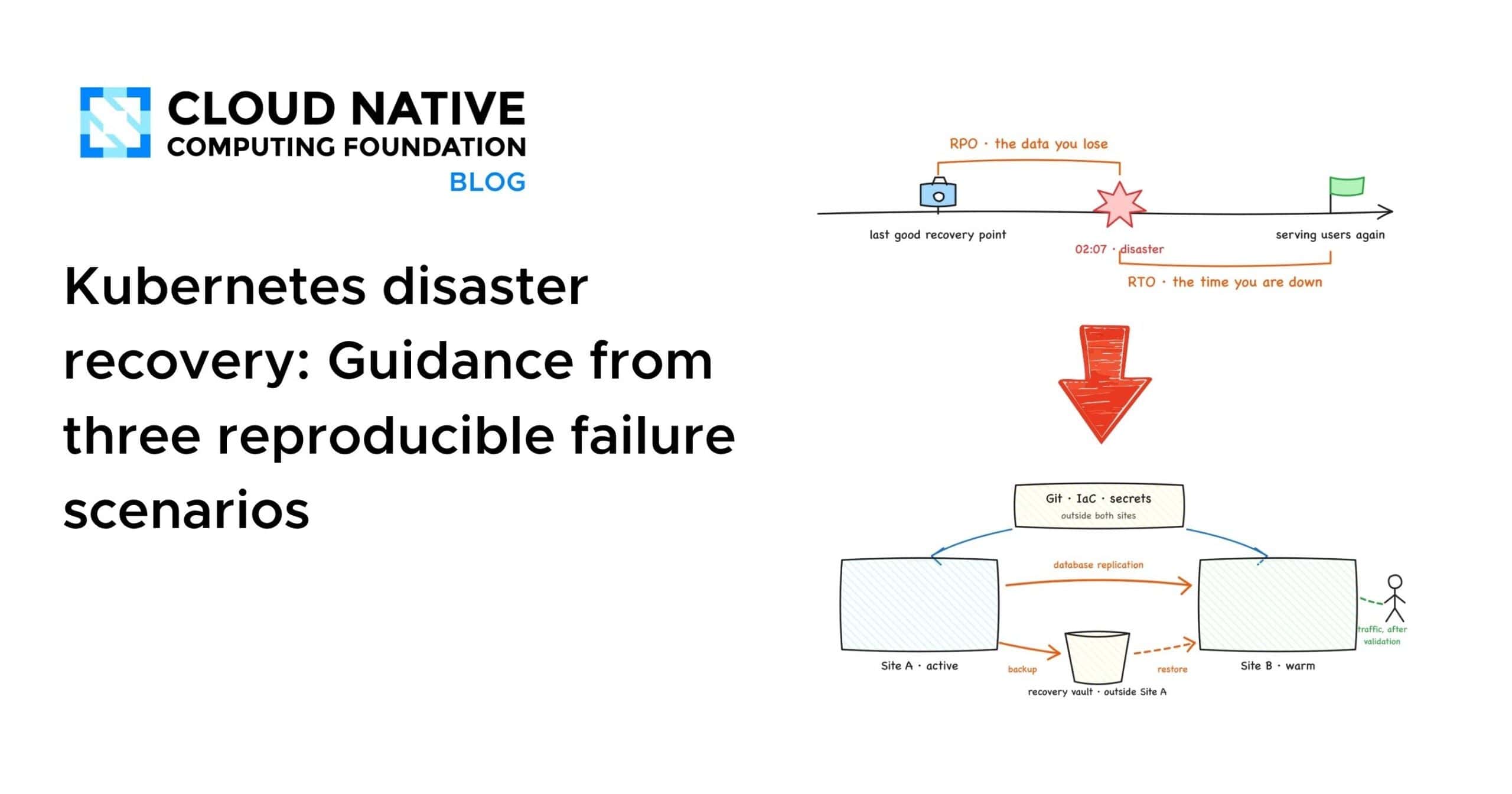
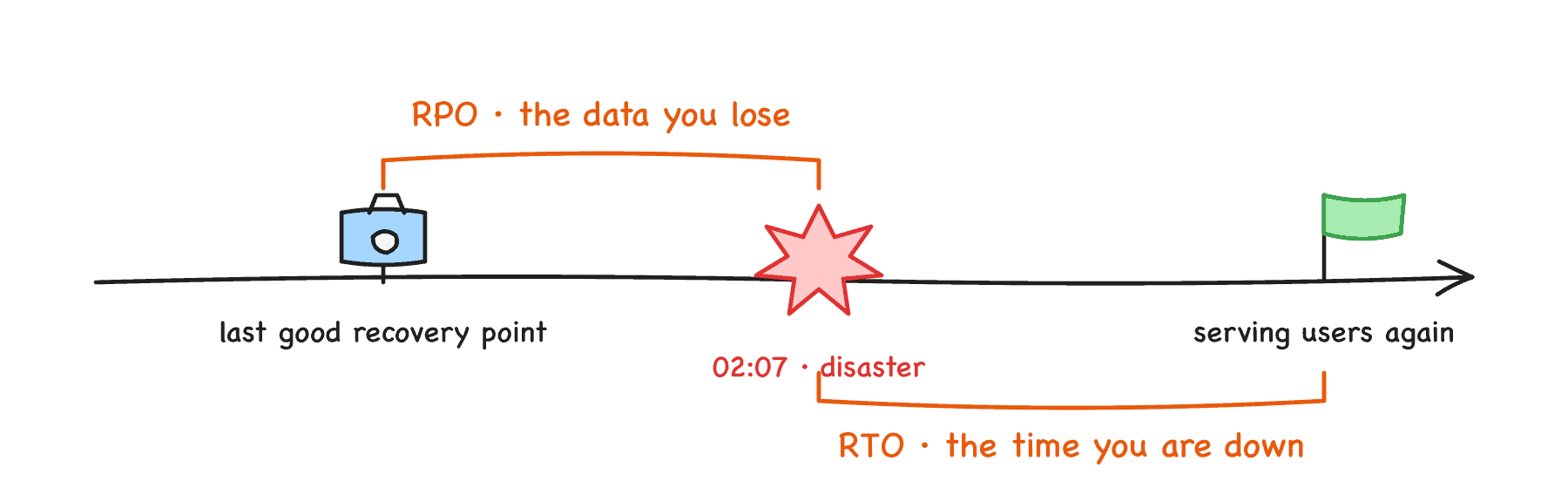
Industry experts note that this is not merely a technical failure but an operational one. If an organization measures RTO (Recovery Time Objective) from the moment a dashboard turns green, they are miscalculating the time required for actual business recovery. Real recovery is only achieved when the application is not just running, but functionally correct and consistent.
Moving Forward: The CNCF Initiative
Recognizing these gaps, the Cloud Native Computing Foundation (CNCF) has established the Cloud Native Business Continuity initiative under the TAG Operational Resilience. This group is currently soliciting contributions to develop comprehensive reference architectures and landscape analyses. As enterprises increasingly migrate mission-critical, stateful workloads to Kubernetes, the guidance provided by this initiative is expected to become the industry standard for risk mitigation.
The core message remains clear: the infrastructure layer is not a substitute for data, and configuration management is not a substitute for state. As the technology matures, the ability to prove a recovery—rather than simply assuming one will work—is becoming the ultimate metric of organizational resilience. Organizations are urged to move beyond basic health checks and implement rigorous, automated recovery testing that mirrors the complexity of their production environments. Failure to do so risks not just data loss, but the integrity of the entire application ecosystem when it is needed most.
For engineers tasked with the responsibility of platform stability, the lab report serves as a foundational document for auditing current DR strategies. By identifying where the "joins" in their own systems are weakest, teams can begin to address the silent failure points that persist in even the most sophisticated cloud-native deployments. The path toward true operational resilience is paved with validated restores, not just successful backups.
Related posts: